





Archipelago of Artistic Practices
A Jubilee and M HKA Research Summit
In collaboration with CKV and nadine
Part of Archipelago of Artistic Practices, an artistic and discursive programme that runs from July 2024 to July 2025.
M HKA INBOX and 6th floor, and extra muros at Out of Sight, Antwerp
Performances, presentations and conversations: 12, 14, 15, 16, 19, 20, 21 June 2025
Exhibition: 13 June – 13 July 2025
Artists:
Tekla Aslanishvili, Justin Bennett, Köken Ergun, Ciel Grommen, Assem Hendawi, Åsa Lie, Zheng Mahler, Vincent Meessen, Hélène Meyer, Scott William Raby, Shahana Rajani, Pejvak, Maximiliaan Royakkers, Mirwan Andan and Iswanto Hartono (ruangrupa), Jadran Sturm, Merzedes Sturm-Lie, Filip Van Dingenen, Stijn Van Dorpe, Clémentine Vaultier, Vermeir & Heiremans
Art workers and researchers:
Ariadna Estella Alba, Samira Alirezabeigi, Nick Axel, Evi Bert, Louise de Bethune, Sabeth Buchmann, Federico Ferretti, Johannes Grillet, Guy Gypens, Nav Haq, Loes Jacobs, Eleonoor Kenis, Sarah Késenne, Pierre Marchand, Raphaël Pirenne, Katrien Reist, Emily Rosamond, Julie Vanderhaeghen, Julie Van Elslande, Tobias Van Royen, Jesse van Winden, Danielle van Zuijlen
Organisations and collectives:
Agency, Atelier Cartographique, BARN Core Team of the Brussels Artist-Run Network, Bureau of Analogies, f.eks., Jadran Sturm & Åsa Lie Private Foundation, Kanal, Kenniscentrum Coöperatief Ondernemen, Kunsthal Gent, nadine, NICC, Re-Connect Festival, Seasonal Neighbours, State of the Arts (SOTA).
Towards a sustainable alternative artistic infrastructure. An ambitious and multifaceted Research Summit built around an innovative digital infrastructure for mapping research-based practices. The Research Summit consists of an exhibition and a discursive and performative programme, woven into one another.
Archipelago of Artistic Practices is a Research Summit organised by Jubilee and M HKA based on Eavatea, a digital infrastructure for mapping research-based and transdisciplinary practices. The programme and exhibition take place in conjunction with M HKA’s major exhibition The Geopolitics of Infrastructure and includes the participation of many of its exhibiting artists. The Research Summit kicks off with performances and participatory events on the opening evening of the exhibition, and then centres around four thematic days and two evening programmes, addressing:
Performing Eavatea (opening evening 12 June, 18-21h)
The Geopolitics of Infrastructure (14 June, 11-18h)
Infrastructure of Archives (15 June, 14-18h)
Reading Room: Archipelago of Artistic Practices (16 June, 18-21h)
Live Conversation: Archipelago of Artistic Practices (19 June, 19:30-21h)
Cooperative Infrastructures (20 June, 11-18h)
Mapping and Performing Infrastructure (21 June, 11-18h)
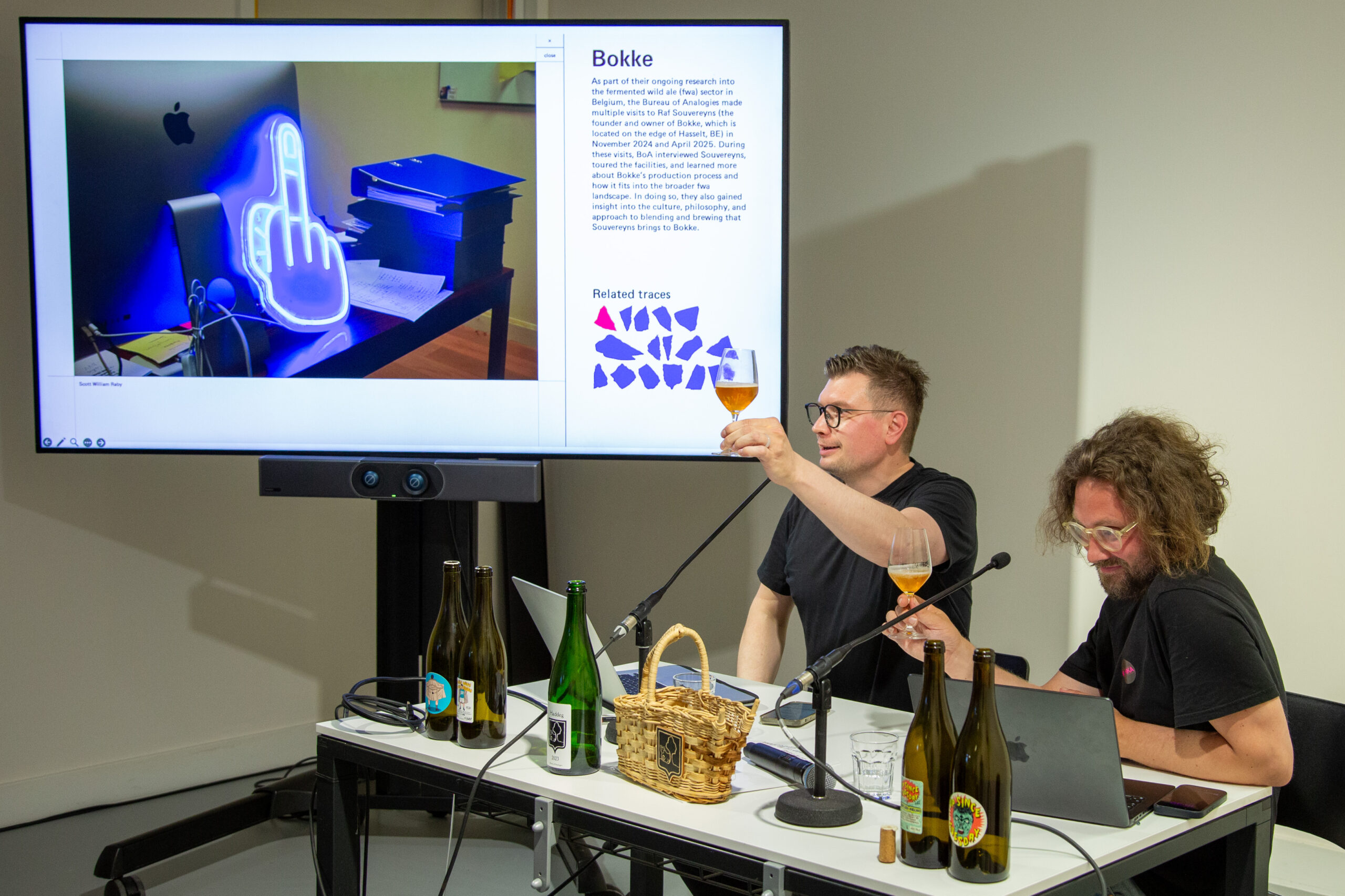
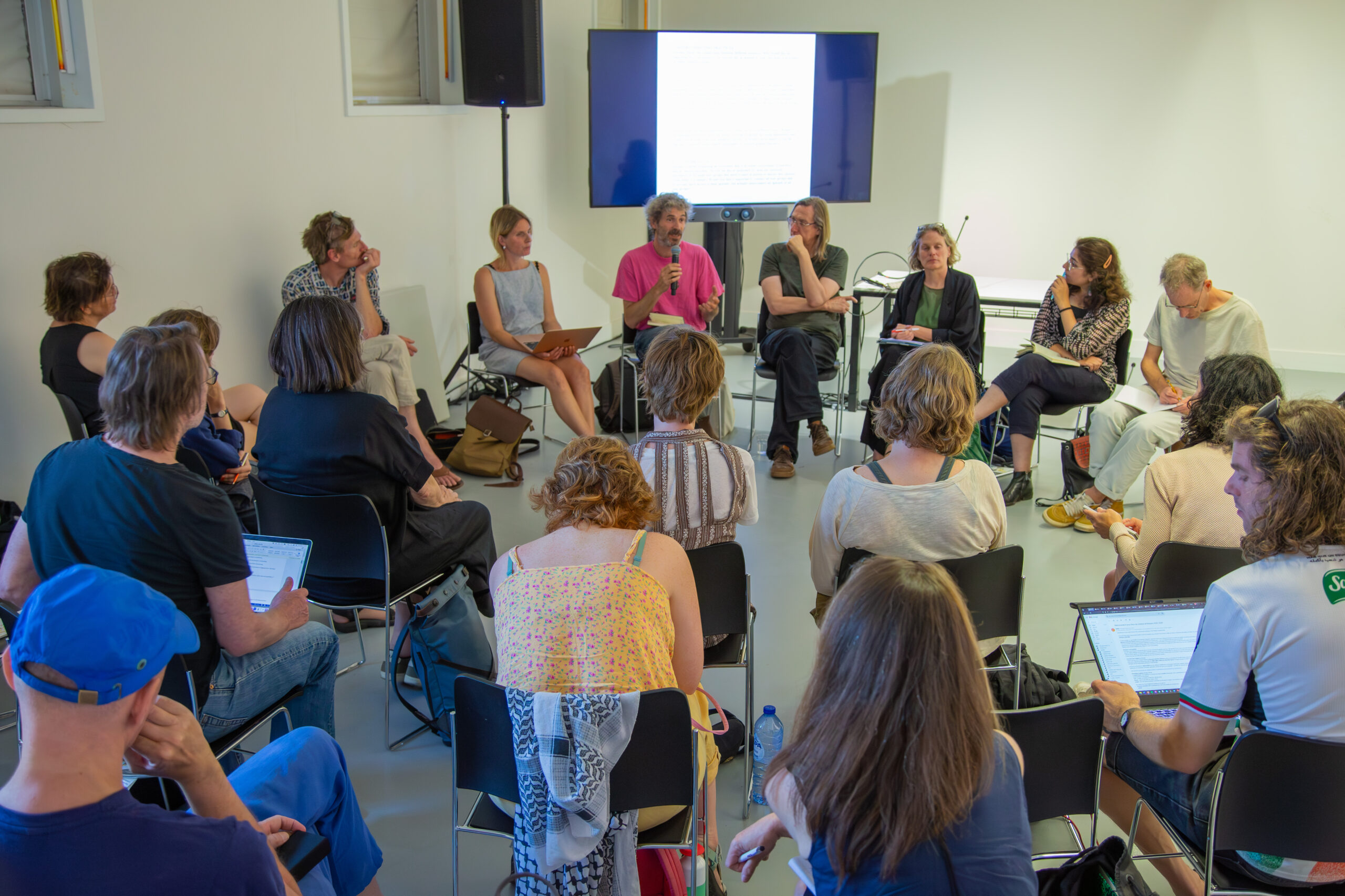
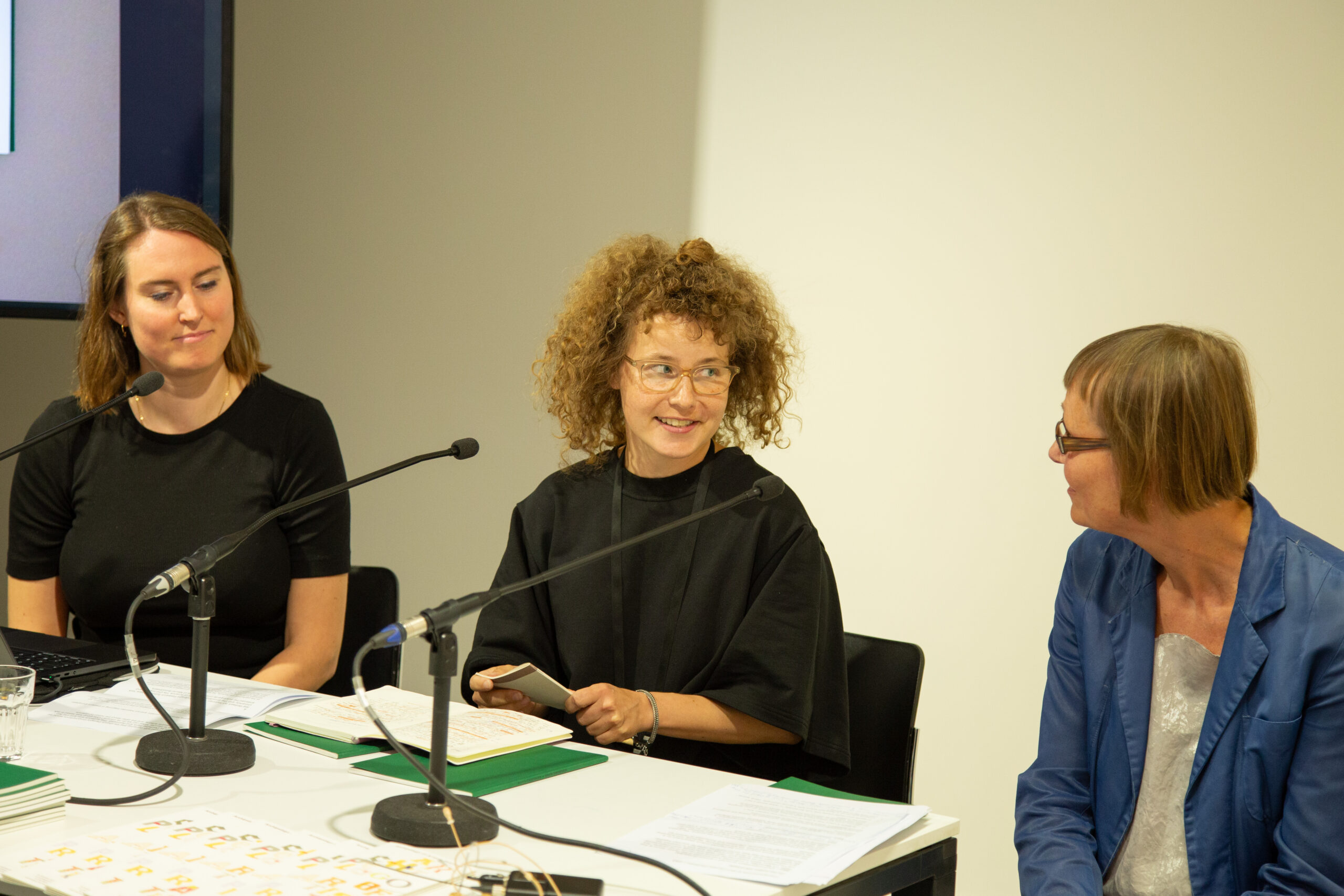
The programme of performances, presentations and conversations brings together artists and researchers for an ambitious programme of talks and activities in support of rethinking artistic infrastructure sustainably. It seeks to offer participants a convivial space for opening insights and opportunities into the possibilities of collaborative research, commoning of resources, and cooperative distribution for artistic practice.
The exhibition takes place across M HKA’s Inbox space and 6th floor. It presents a number of artistic research narratives – objects, documents, protocols, etc – and imagines how these various art practices can be linked based on their singular research trajectories. As such it is conceived as a spatial transposition of the tool, with a strong emphasis on the relational and narrative potential that Eavatea currently embodies.
In the context of this Research Summit, Vincent Meessen has written From institutional critique to infrastructural critique? This short critical text articulates the rise of artistic awareness of infrastructure in terms of a de-proletarianisation of artistic work.
The Research Summit focuses on the premise of ‘learning by doing’. Collective interventions and moments of constructive reflection, including conversations, screenings, performances and walks, explore themes of the exhibition and interrogate the Eavatea interface as an innovative relational infrastructure that seeks to inspire, initiate and underpin new research-based artistic trajectories.
Download the leaflet with the full programme here (PDF: 1,5 MB). It is designed by Olivier Bertrand.
Eavatea
Currently under development through a Brussels-based partnership with nadine and Atelier Cartographique, Jubilee named Eavatea after a notation on a map drawn by Tupaia, a Polynesian 18th century master navigator. Tupaia merged the Western Mercator mapping paradigm with traditional wayfinding forms guided by nature and storytelling. His converging of these two systems of representation proved to be inspiring for the development of Eavatea, eliciting such questions as: how would the interface explore new narrative possibilities and visualise, display, archive and distribute artistic practices that are in situ, nomadic, collective or transdisciplinary? How would Eavatea embody the situated knowledge generated by these practices and, most importantly, highlight possible links between them?
As a research infrastructure for innovation and commoning, and built with open-source software, Eavatea brings production, distribution and financing into novel alignment. Opening up to new forms of solidarity through a hybrid of digital and physical relations, Eavatea raises pertinent questions around art’s predominant infrastructure with its focus on the artist as individual practitioner.
Eavatea has been in development since 2022 through a partnership between Atelier Cartographique, nadine and members of Jubilee.
Jubilee is a Brussels-based platform for artistic research jointly developed and led by its members, visual artists and art workers. Jubilee’s focus on supporting artistic practices and initiating collective research embodies the platform’s ambition for an ecology of artistic practices. Since 2013, Jubilee has developed various research tools. Next to Eavatea these include the Caveat website on relational contracting, Tracks, a smartphone app for audio-walks, and monthly Reading Rooms. Jubilee’s annual Summer Schools aim to develop ideas around artistic self-organisation and alternative pedagogies, linking cooperative models and commoning with broader societal issues.
Atelier Cartographique SC is a Brussels-based worker cooperative of cartographic practices. It focuses on the cultural challenges of cartography and the social dimensions of spatial representations and information systems technologies. Atelier Cartographique provides tools for administrations, NGOs, cultural actors, academic research, and citizen driven initiatives.
nadine is a Brussels-based laboratory for contemporary transdisciplinary arts. Through (on-site) residencies, research projects and workshops, the organisation gives artists the space and time to develop their practice. nadine is closely connected to wandering arts—practices that are fluid, temporary, and traverse different locations and media. Within this context, “mapping” plays a central role: the act of tracing, framing, and making these practices public – both online and offline. The notion of a shared tool – one that is transparent and adaptable to the context-specific nature of these practices – supports this broader aim: to facilitate collaboration, foster accessibility, and offer continuity across shifting artistic trajectories.
Practical information
The Research Summit takes place in a public programme at M HKA on Thursday 12, Saturday 14, Sunday 15, Friday 20 and Saturday 21 June 2025, and at Out of Sight on Monday 16 and Thursday 19 June.
The exhibition runs in M HKA’s INBOX space and on the 6th floor from Friday 13 June until Sunday 13 July
Attendance is free. Registration is required through this link. You can register for all or some days.
Language: English
Archipelago of Artistic Practices is developed in conjunction with the exhibition:
The Geopolitics Of Infrastructure
Contemporary Perspectives
M HKA, 13 June – 21 September 2025
Including: Tekla Aslanishvili, Mirwan Andan & Iswanto Hartono, Winnie Claessens, Köken Ergun & Fetra Danu, Köken Ergun & Tashi Lama, Assem Hendawi, Jean Katambayi Mukendi, Pejvak, Shahana Rajani, Sojung Jun, The Question of Funding, Jonas Staal and Zheng Mahler.
Curated by Nav Haq
Infrastructure is big ideas. It finds its purpose in facilitating the flows, exchanges and support structures that shape our lives, livelihoods and civilisations. Across its multiple purposes, including such things as trade, transport, manufacturing, energy, communication and war, as well as key facets of the public sphere including health, education, utilities and the arts, it embodies the idea of a world in motion.
Whether public, private or some hybrid of both, infrastructure projects have become potent symbols of modernisation, ambition, influence and power in many parts of the world. It is the current and future relation between things. The classical elements – earth, wind, water, fire – are exploited in a context of overlapping jurisdiction, transnational circulation, rapid urbanisation, and the structuring of labour. All of this exposing the landscape to complex geopolitics.
Artists, through their practice, are considering the political commitments, imagination, affect, and power relations of infrastructure. The exhibition The Geopolitics of Infrastructure will present the work of a generation of artists bringing contemporary perspectives on the particular topicality of infrastructure in the trans-national, geopolitical context.
Further information about The Geopolitics of Infrastructure can be found here.
Credits
Eavatea has been in development since 2022 through a partnership between Atelier Cartographique, nadine and members of Jubilee.
Jubilee is a Brussels-based platform for artistic research jointly developed and led by its members, visual artists and art workers. Jubilee’s focus on supporting artistic practices and initiating collective research embodies the platform’s ambition for an ecology of artistic practices. Since 2013, Jubilee has developed various research tools. Next to Eavatea these include the Caveat website on relational contracting, Tracks, a smartphone app for audio-walks, and monthly Reading Rooms. Jubilee’s annual Summer Schools aim to develop ideas around artistic self-organisation and alternative pedagogies, linking cooperative models and commoning with broader societal issues.
In 2025, Jubilee is supported through M HKA’s participation in the L’Internationale programme Museum of the Commons. Archipelago of Artistic Practices is a Research Summit produced by Jubilee and M HKA, in co-production with Atelier Cartographique (Brussels), Flemish Centre for Art Archives (CKV, Antwerp), f.eks. (Aalborg), Kunsthal Gent (Ghent) and nadine (Brussels). The programme is supported by the Flemish Community (VG) and the Flemish Community Commission Brussels (VGC).
The Research Summit Archipelago of Artistic Practices and the exhibition The Geopolitics of Infrastructure take place within the framework of the current L’Internationale project Museum of the Commons.
L’Internationale is funded by the European Union. Views and opinions expressed are however those of the author(s) only and not necessarily reflect those of the European Union or the European Education and Culture Executive Agency (EACEA). Neither the European Union nor EACEA can be held responsible for them.


