Reading Room #45: Agency & Another Science
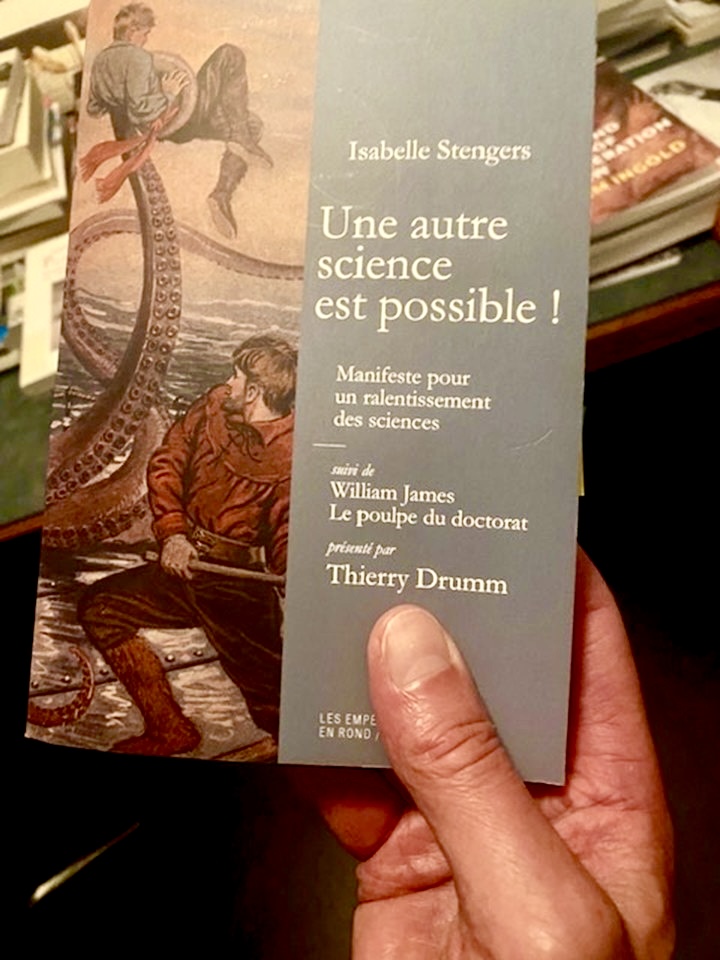
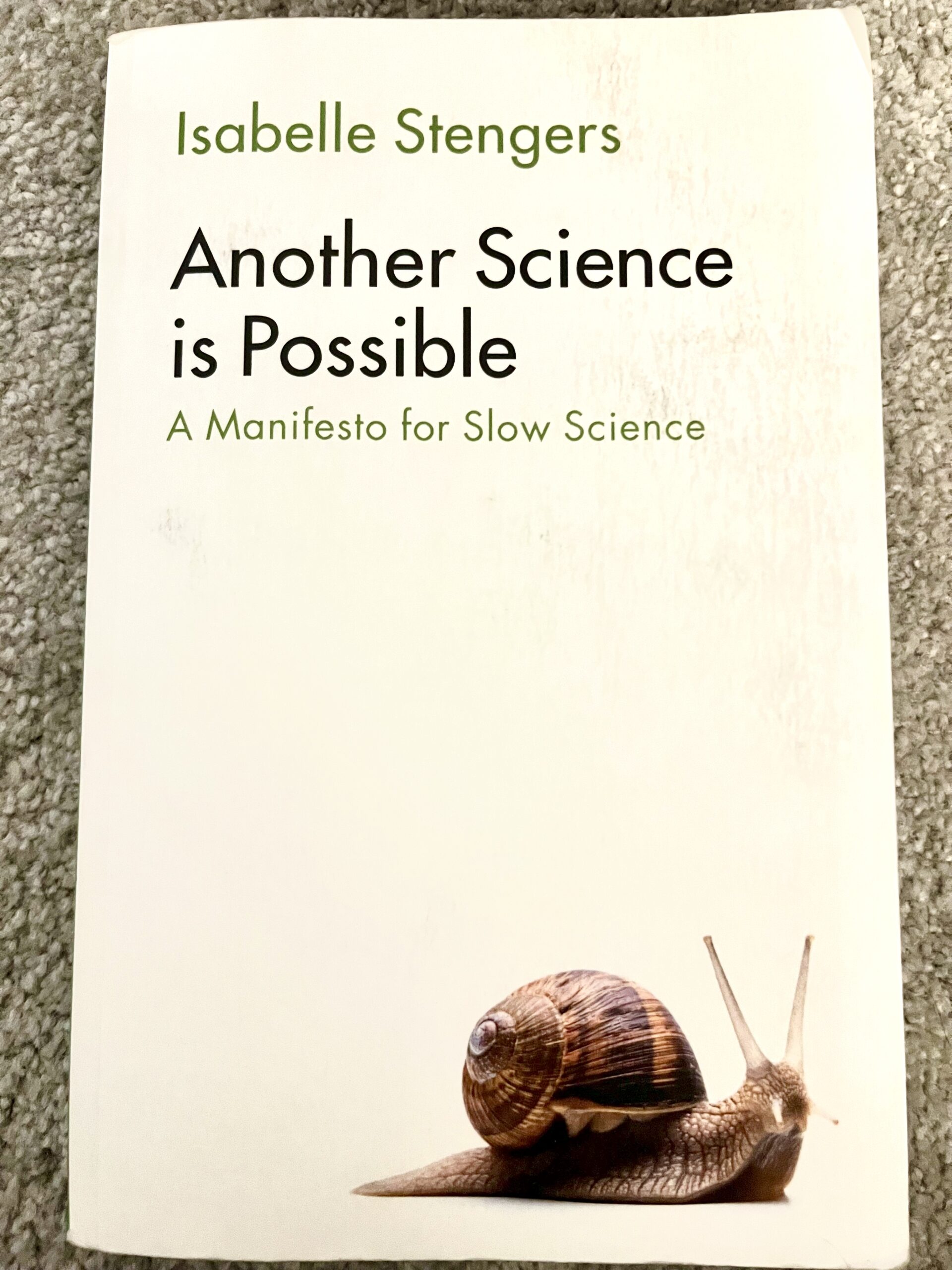
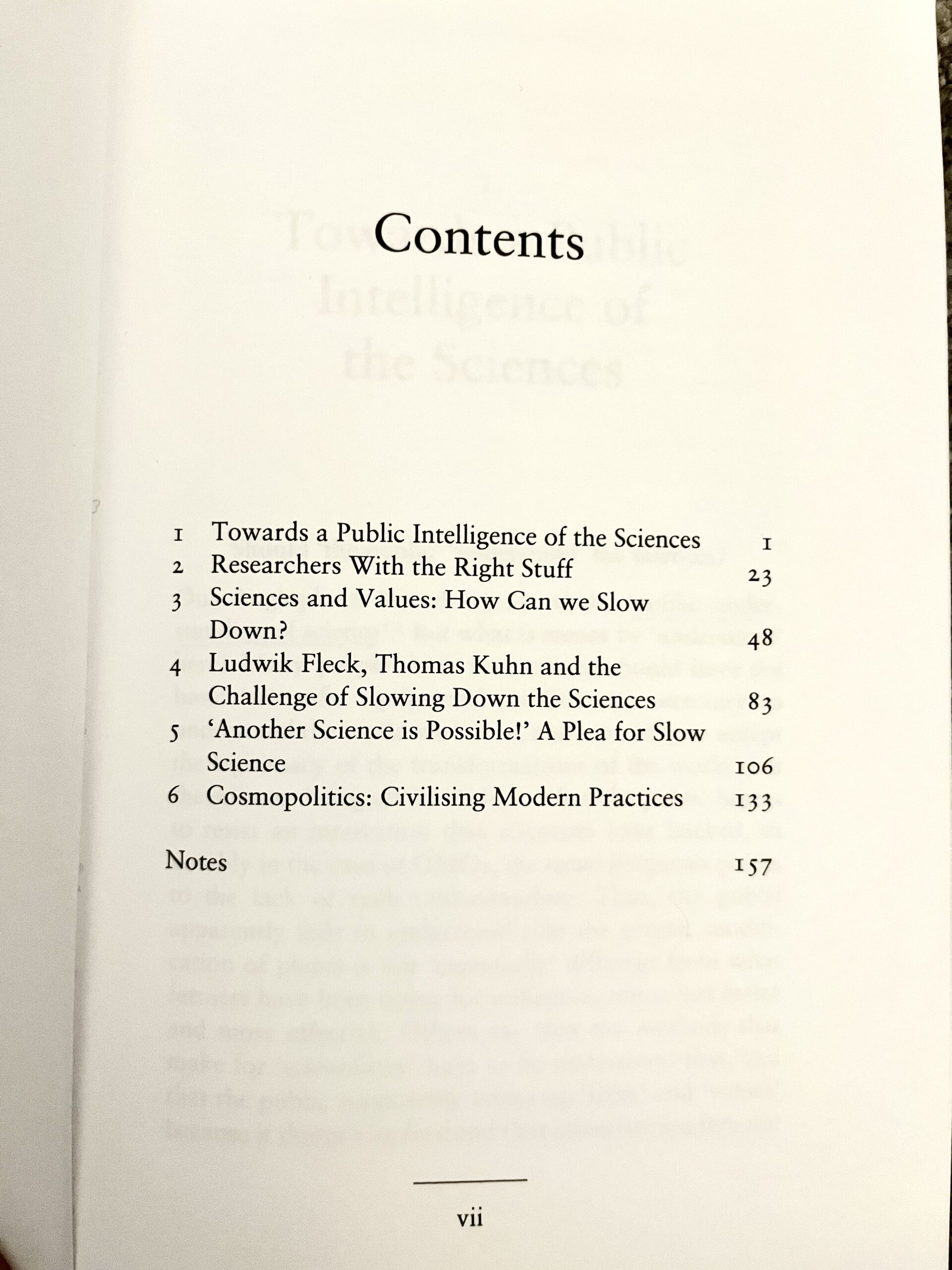
Jubilee’s 2025 cycle of Reading Rooms focuses on the book collection of artist Kobe Matthys (1970-2023). For this seventh reading session, befriended researcher Samira Ali Reza Beigi proposes to invite Jan Masschelein in turn. Masschelein is a Professor at KU Leuven specialised in Educational Philosophy. He guides us through fragments from Isabelle Stengers’ Another Science is Possible (2017). In this work, subtitled A Manifesto for Slow Science, Stengers claims that scientific practices have been enclosed by industrial interests. At Agency’s Praticauthèque, Brussels
12/12/2025, 18-21h
Libraries are research tools of a specialised and subjective nature, but also eminently sustainable and social. Forms and practices of knowledge transfer are always central to Jubilee’s practices. The diverse book collections that exist among and around Jubilee’s members can provide entry points for collective study and exchange. In 2024, we had a Reading Room programme that drew on Fred Dewey’s library. In 2025, we are unlocking the library of the late Kobe Matthys. Kobe was an internationally renowned artist (Agency / Agence / Agentschap), but also an activist, active in permaculture, working member of SOTA and a beloved teacher and mentor of art students at the École de recherche graphique (ERG, Brussels).
A small group of enthusiasts have been keeping the archive and his library alive since Kobe’s passing. With this archive, Kobe created a unique source of knowledge surrounding the history of (intellectual) property rights and, more precisely, the vague and contestable boundaries of authorship, which to this day define the legal context of the arts. But property law also determined the way ‘modern man’ has come to experience, understand, categorise and value the world over the past 300 years and is the basis for modern capitalism, whose catastrophic social, economic and environmental consequences we are increasingly experiencing.
In 2025, Jubilee opens up Kobe’s thematically vast library (with an estimated 4000 books, magazines and other titles) for its Reading Rooms. The monthly selection will be a source of relevant conversations, discoveries, and encounters with participants Jubilee did not yet know. In December we invite Jan Masschelein. He proposes to focus on the prevailing model of progress, one that is being vigorously implemented by the so-called ‘knowledge economy,’ of which also art is part. Masschelein writes:
“Isabelle Stengers’ concept of slowing down does not aim to destroy the relations that give scientific practice its power and autonomy. Rather, it recognizes that these privileges are being attacked. She argues for a ‘public intelligence’, an intelligently distributed ranking of roles, defined by the concerns of the agents themselves, as new sources of interest, coordination and validation. Another Science is Possible attempts to propose new ways of being related and of being situated that would lead scientific practices not back to the path of “conquest” but to that of “adventure.”
Departing from this book – both in the sense of taking Stenger’s concrete suggestions to slow down as starting point, and going away from them – I would like to explore the way in which the university, taken not as an institution, but as a collection of pedagogic forms (lecture, seminar, workshop, laboratory … including all kinds of physical and mediatic displacements and certain forms of making public) actually enacts such a slowing down. Elaborating on a phrase from Francoise Waquet that the university is the site par excellence of spoken science, and making use of the way in which Boaventura de Sousa Santos ‘writes’ on ‘Authorship, Writing, and Orality’ in his book on epistemologies of the south and the end of the Cognitive Empire, I would like to indicate some elements of the power of pedagogic forms to slow down science (related in different ways to the oral) and enact “encounters that give things the power to make us think” (Deleuze).
It seems to me that this is the power which allows developing and elaborating on critical ideas, even the most harsh critics of the (Western) university itself. In forewords or introductions of these critical readings of university, authors find it very important to mention precisely the courses and seminars that allowed them to think and develop thoughts. They thereby recognize the ‘working’ of these physical, contaminating and infectious forms of togetherness, these forms of pedagogical life as generating the energy and the power to make them (and their students) think! That is to allow them to slow down. But, as is the case with many forms of life, also many forms of pedagogical life are increasingly threatened and (have already been) destroyed. The contemporary importance of oral practices also comes to forth, as a response to the automation and disembodiment of educational practices through digital technologies and generative Artificial Intelligence, namely writing. Hence, my plea for a regeneration and rejuvenation of these forms, which will implicate students, researchers as well as all kinds of mattering matter.”
Calendar of Agency Reading Rooms 2025
20/01/2025: Reading Room #38: Agency (introductory session)
17/03/2025: Reading Room #39: Agency and the Undercommons (Els Silvrants-Barclay)
14/04/2025: Reading Room #40: Agence & Notre condition (David Aubin)
19/05/2025: Reading Room #41: Agency & NICC (Ariadna Estalella Alba)
16/06/2025: Reading Room #42: Archipelago of Artistic Practices (Raphaël Pirenne)
19/09/2025: Reading Room #43: Agency & Res Nullius (Wim Cuyvers)
10/10/2025: Reading Room #44: Agency & Law & Magic (Erika Sprey)
12/12/2025: Reading Room #45: Agency & Another Science (Jan Masschelein)
Practical
Location Reading Room #45:
Agency’s Praticauthèque
Rue Theodore Verhaegenstraat 18
1060 Brussels
Each reading room takes place from 18-21h. Bites are provided
The Praticauthèque is located on the top floor of the building. There is an elevator. As there is no intercom, there is someone at the door – until 18h. Please be present before that time.